Young, matured, old or over-aged cheese: what is the difference?
Young, young matured, matured, extra matured, old or extra-aged: you will come across all these terms at the cheese shop and in our webshop. But what exactly is the difference between young and old cheese? The answer lies in one word: maturation time. How long a cheese matures determines its taste, texture and even its colour. In this blog, you will read what happens during maturation, how long each type of cheese matures and which cheese is best to choose for bread, a snack platter or in the kitchen.

What happens during cheese maturation?
After making and brining, fresh cheese goes to the maturation warehouse. There it lies on wooden shelves at a fixed temperature and humidity, and is regularly turned. A lot happens during that maturation:
- Moisture evaporates. The cheese becomes increasingly firm and dry. Young cheese is supple, old cheese becomes hard and crumbly.
- Proteins are broken down. Enzymes and lactic acid bacteria break down milk proteins into smaller substances. This creates the full, savoury and piquant taste of matured and old cheese.
- Cheese crystals form. In longer matured cheese, crunchy white crystals form, mainly consisting of the amino acid tyrosine. A sign of a beautiful, long matured cheese.
- The colour becomes deeper. Young cheese is light yellow, old cheese gets a deeper, golden yellow colour.
In short: the longer a cheese matures, the fuller and more piquant the taste and the harder the texture.
Cheese maturation time: an overview
The names young, matured and old are not a taste description, but say something about how long the cheese has matured. For Gouda cheese, approximately these maturation times apply:
| Cheese type | Maturation time | Taste and texture |
|---|---|---|
| Young | approx. 4 weeks | Mild, creamy and soft |
| Young matured | approx. 8 weeks | Creamy with a little more taste |
| Matured | approx. 4 months | Full and creamy, firm |
| Extra matured | approx. 7 months | Powerful and slightly piquant |
| Old | approx. 10 to 12 months | Piquant, savoury and crumbly |
| Extra-aged | 1 year or longer | Intense, dry, full of cheese crystals |
The precise maturation time varies per cheesemaker. So see the times as a guideline.
Young cheese
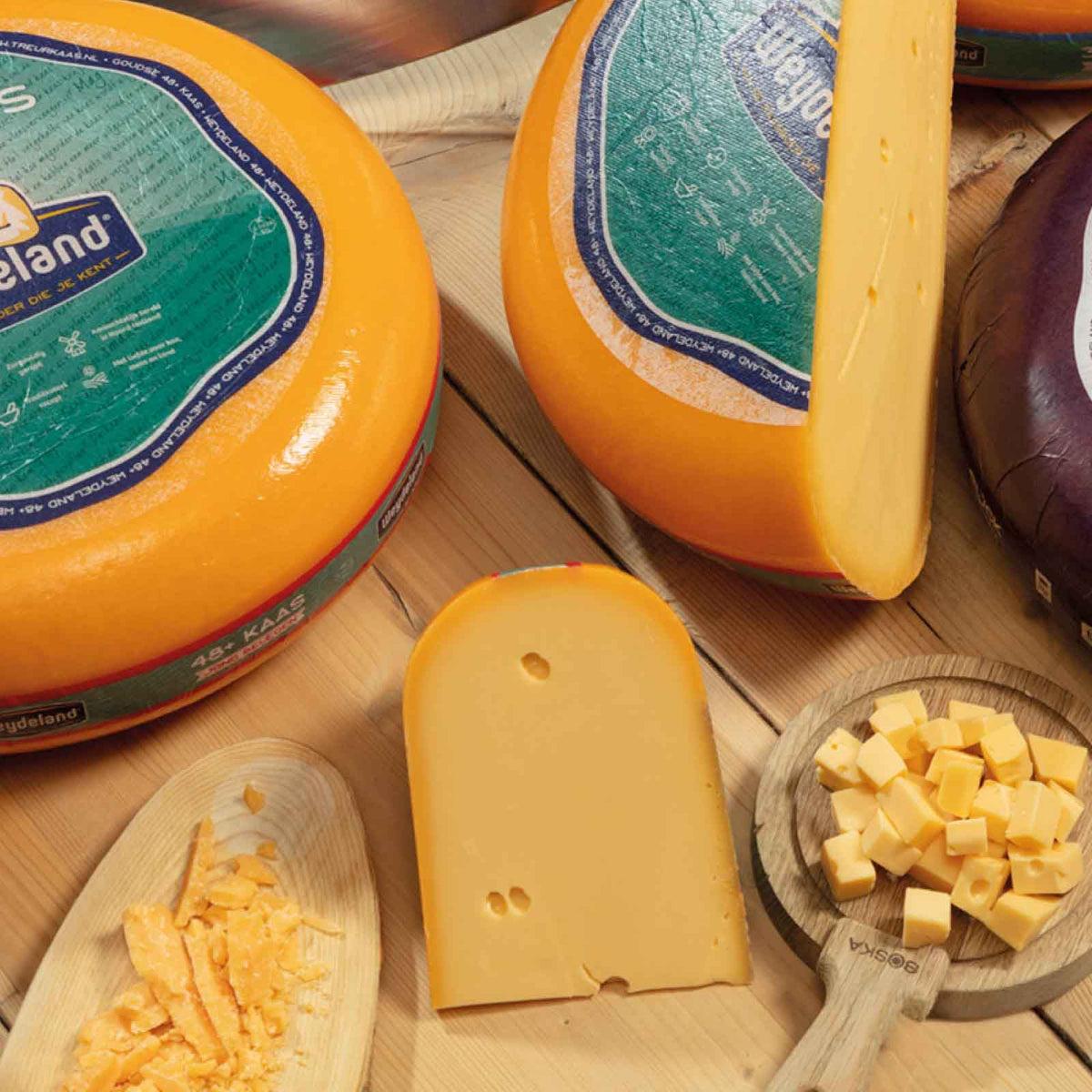
Young cheese matures for approximately four weeks. The taste is mild and creamy, the texture soft and supple. Because of this, young cheese is a favourite among children and anyone who likes a mild taste. Young cheese also melts very nicely. Try for example Weydeland 48+ Young or the spicy Komijnekaas 48+ Young.
Young matured cheese
Young matured cheese matures for approximately eight weeks and is the most eaten cheese in the Netherlands. It is still creamy, but already has a little more taste than young cheese. A real all-rounder for bread. In our webshop you will find among others Weydeland 48+ Young Matured, the less fatty Weydeland 35+ Young Matured and Weydeland 20+ Young Matured, and Weydeland 48+ Less Salt.
Matured cheese
Matured cheese matures for approximately four months. The taste becomes fuller and richer, the cheese firmer. Matured cheese is ideal for those who want a little more taste without it becoming too piquant. Think of Weydeland 48+ Matured, Weydeland 35+ Matured or Komijnekaas 48+ Matured.
Extra matured cheese
Extra matured cheese matures for approximately seven months. This is where the cheese really starts to get character: powerful, slightly piquant and somewhat more crumbly. A nice cheese to serve in cubes. Try Weydeland 48+ Extra Matured or the less fatty Weydeland 35+ Extra Matured.
Old and extra-aged cheese
Old cheese matures for about ten to twelve months, extra-aged cheese for a year or longer. The taste is piquant, savoury and intense, the texture dry and crumbly. Often you will taste crunchy cheese crystals. Old cheese is delicious with a glass of wine or with a sweet chutney. Lovers choose Weydeland 48+ Old Extra-Aged, the extra long matured Weydeland Rijck crumbly cheese or Komijnekaas 48+ Old.
Which cheese do you choose for what?
Each maturation level has its own best application:
- On bread: young matured or matured cheese. Creamy, easy to cut and tasty for everyone.
- To melt (toastie, casserole, cheese sauce): young or young matured cheese melts the best and stays supple.
- On the snack platter: combine different maturation levels, for example a creamy young matured, a powerful extra matured and cubes of extra-aged cheese. This way your guests can taste the difference themselves. Serve it on a beechwood snack platter with some salted almonds or cashews.
- To grate and cook: old and extra-aged cheese give a lot of taste, so you need very little of it. Cubes of Weydeland Rijck are also delicious over a salad or soup.
Can't choose? Our snack boxes contain a mix of different cheeses, so you can try them all.
Frequently asked questions about young and old cheese
How old is old cheese?
Old cheese matures for approximately ten to twelve months. If a cheese matures for a year or longer, it is called extra-aged.
What is the difference between old and extra-aged cheese?
Extra-aged cheese matures longer than old cheese, at least a year. Because of this, the taste is even more intense, the cheese is drier and more crumbly and contains more cheese crystals.
What are the white dots in old cheese?
Those are cheese crystals. They form during a long maturation when proteins are broken down. They are completely harmless and actually a sign of quality.
Which cheese is eaten the most in the Netherlands?
Young matured and matured Gouda cheese are the most popular cheeses in the Netherlands, especially on bread.
Is old cheese lactose-free?
Yes. The longer a cheese matures, the less lactose is in it. The complete Weydeland range is lactose-free, from young to extra-aged. Read more about it in our blog about lactose-free cheese.
What does 48+ mean on cheese?
The number indicates the fat content in the dry matter of the cheese. 48+ is full-fat cheese; 35+ and 20+ are less fatty variants. The fat content is independent of the maturation time.
What is matured cheese?
Matured cheese is Gouda cheese that has matured for approximately four months. It is between young and old cheese: full and creamy in taste, with more character than young matured cheese, but not yet piquant.
Is old cheese healthier than young cheese?
Not necessarily. Old cheese contains less moisture. Because of this, there is slightly more protein per 100 grams, but also slightly more fat and salt than in young cheese. Which cheese suits you best depends on what else you eat. Do you pay attention to salt? Then read our blog about low-salt cheese.
Conclusion: the difference lies in the maturation time
The difference between young, matured, old and extra-aged cheese comes down to the maturation time. Young cheese is mild and creamy, matured cheese full of taste and old and extra-aged cheese piquant, savoury and crumbly with cheese crystals. Which one you choose depends on your taste and what you use the cheese for. Discover the complete Weydeland range at Kaas & Borrelz and taste the difference yourself: from young to extra-aged.


