
Lactose-free cheese: which cheese can you eat if you are lactose intolerant?
Are you lactose intolerant but don't want to do without a delicious piece of cheese? Good news: many cheeses are naturally lactose-free. The entire Weydeland range, from young to extra-aged, is lactose-free. In this blog, you'll learn exactly what lactose-free cheese is, which cheeses are lactose-free (and which are not), what to look out for when buying, and how to put together a delicious lactose-free snack platter.

What is lactose and what is lactose intolerance?
Lactose is the natural sugar in cow's, goat's and sheep's milk. Your body needs the enzyme lactase to digest lactose. If you produce too little of it, your body cannot break down lactose properly. This is called lactose intolerance.
Common symptoms of lactose intolerance include:
- stomach pain and cramps
- bloating
- flatulence
- diarrhoea
Lactose intolerance is common, especially in adulthood. The good news: most people with lactose intolerance can tolerate small amounts of lactose just fine. And that is precisely why cheese often fits perfectly into a low-lactose or lactose-free diet.
Is cheese lactose-free? Here's how it works
The reason many cheeses are lactose-free is due to the way cheese is made. During cheesemaking, milk is curdled, causing it to separate into curds and whey. Most of the lactose is removed with the whey. Any lactose remaining in the curds is converted into lactic acid by lactic acid bacteria during ripening.
The result: after a few weeks of ripening, there is almost no lactose left in hard and semi-hard cheese. A Gouda cheese usually contains less than 0.1 grams of lactose per 100 grams. This is so little that this cheese is considered naturally lactose-free. So there is no need for a special 'lactose-free version': the regular cheese is already lactose-free.
Which cheeses are lactose-free? An overview
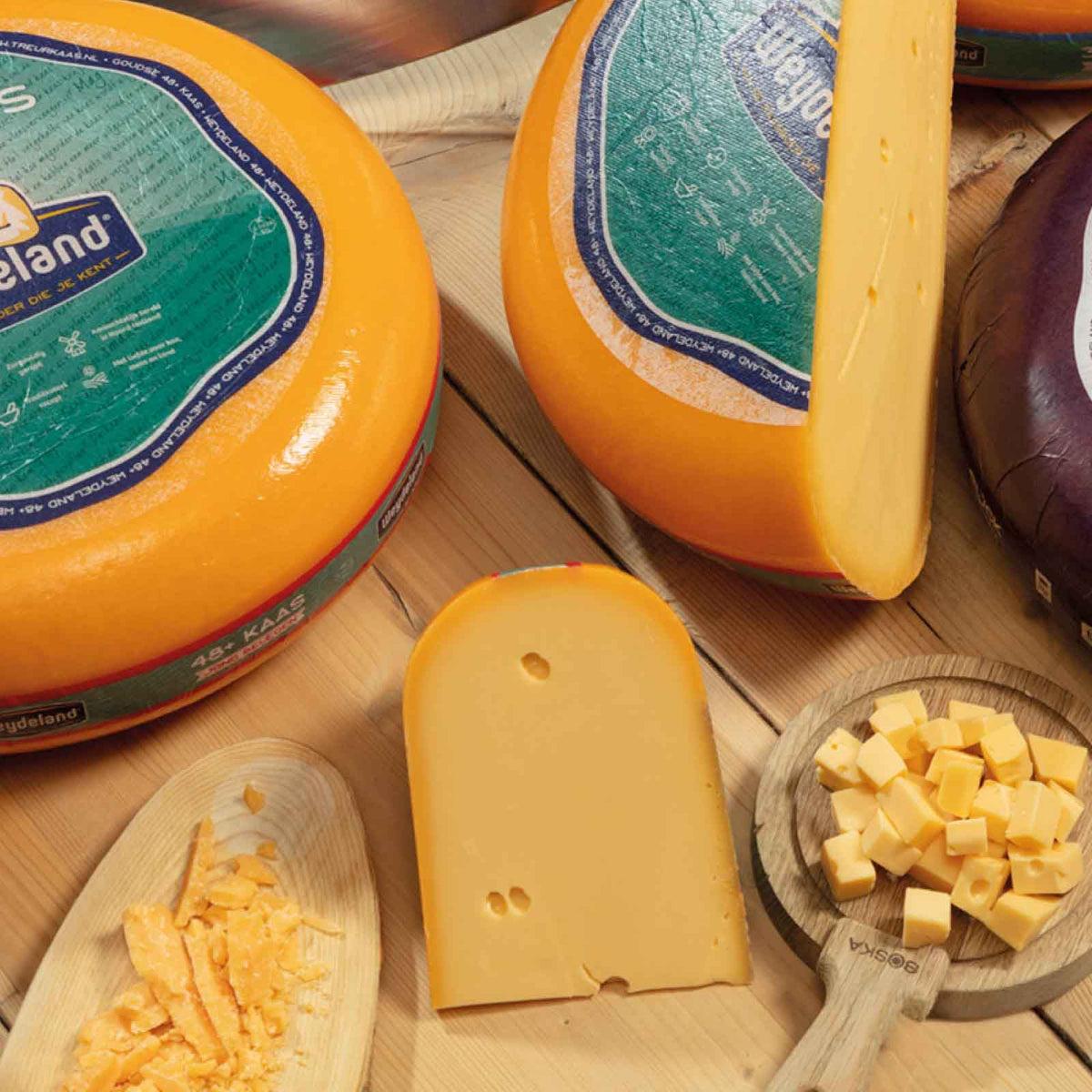
At Kaas & Borrelz, the entire Weydeland range is lactose-free. You can therefore choose these cheeses with peace of mind if you are lactose intolerant:
- Weydeland 48+ Young – mild and creamy
- Weydeland 48+ Young Matured and Weydeland 48+ Matured – full-bodied and creamy in flavour
- Weydeland 48+ Extra Matured – powerful and slightly piquant
- Weydeland 48+ Aged Extra-Aged – full of flavour crystals
- Weydeland Rijck crumbly cheese – long-ripened and intense
- Weydeland 48+ Grass-fed Cheese – made from the first milk after winter
- Weydeland 48+ Lower Salt – lactose-free and lower in salt
- Weydeland 20+ Young Matured and Weydeland 35+ Young Matured, Matured and Extra Matured – lower in fat, just as lactose-free
- Weydeland 35+ Mild Cumin Cheese – lactose-free with a spicy twist
This is how you can find a lactose-free cheese for every taste: from mild and creamy to piquant and powerful, and even in a lower-fat or lower-salt version.
Aged cheese and lactose: the longer it is ripened, the better
The longer a cheese is ripened, the more time the lactic acid bacteria have to convert lactose. Aged and extra-aged cheeses, such as Weydeland 48+ Aged Extra-Aged and Weydeland Rijck crumbly cheese, are therefore a safe choice for people with lactose intolerance. But even a young or young matured Weydeland is already lactose-free, because most of the lactose disappears in the first few weeks. Do you like piquant flavours with cheese crystals? Then an aged or extra-aged cheese is a perfect choice.
Which cheeses do contain lactose?
Not all cheese is lactose-free. Be careful with these cheeses and snacks if you are lactose intolerant:
- Farmhouse cheese, such as the Erfgoed Stelling 502 young raw milk farmhouse cheese
- Cream cheese, such as Machelle pineapple cream cheese and Machelle ginger cream cheese
- Spreadable cheese, such as Chevre Doux goat spreadable cheese
- Snacks with cream cheese, such as stuffed peppers with cream cheese
Fresh and spreadable cheeses are not ripened or barely ripened and contain more whey, and therefore more lactose. Are you unsure about a cheese that is not mentioned here? Then contact us and we will find out for you.
Buying lactose-free cheese: what to look out for
Want to be sure that you are buying lactose-free cheese? With these tips you can choose with peace of mind:
- Look for the text 'naturally lactose-free'. Many cheese brands put this on the packaging.
- Check the nutritional table. In cheese, 'sugars' consist almost entirely of lactose. Does it say less than 0.1 grams of sugars per 100 grams? Then the cheese is lactose-free.
- Read the ingredients list on processed cheese products. Grated cheese, cheese snacks and cheese with additives may contain milk powder or whey.
- Ask your cheese specialist. A good cheesemonger knows exactly which cheeses are lactose-free, and we at Kaas & Borrelz are also happy to help.
Lactose intolerance or cow's milk allergy? An important difference
Lactose intolerance and cow's milk allergy are often confused, but they are two different things. With lactose intolerance, you have difficulty with milk sugar. With a cow's milk allergy, your immune system reacts to the proteins in milk. Lactose-free cheese still contains milk protein and is therefore not suitable for a cow's milk allergy. Are you not sure what you have? Then seek advice from your GP or a dietitian.
Putting together a lactose-free snack platter
With lactose-free cheese, you can easily put together a snack platter that everyone can enjoy. Here is how to do it:
- Choose three to four Weydeland cheeses with different flavours, for example a creamy Weydeland 48+ Young Matured, the spicy Weydeland 35+ Mild Cumin Cheese, a piquant Weydeland 48+ Aged Extra-Aged and chunks of Weydeland Rijck.
- Add crunchy nuts, such as roasted and salted almonds or salted cashews.
- Serve it in style on a beechwood snack platter, or choose a snack platter with three bowls for the nuts and other extras.
- Pay attention to the extras: dips, crackers, cold cuts and snacks such as stuffed peppers with cream cheese may contain dairy products or lactose. Always check the ingredients list.
Looking for lactose-free cheese for your next snack? Take a look at the Kaas & Borrelz webshop and discover the entire Weydeland range: from young to extra-aged, all lactose-free.
Frequently asked questions about lactose-free cheese
Is young cheese lactose-free?
Yes. Weydeland 48+ Young is lactose-free. Most of the lactose disappears with the whey during cheesemaking, and the rest is converted during the first few weeks of ripening.
Is farmhouse cheese lactose-free?
No, farmhouse cheese is not lactose-free. Therefore, choose a cheese from the Weydeland range if you are lactose intolerant.
Is Weydeland cheese lactose-free?
Yes. The entire Weydeland range is lactose-free, from Weydeland 48+ Young to Weydeland 48+ Aged Extra-Aged and Weydeland Rijck crumbly cheese. The lower-fat 20+ and 35+ variants, Weydeland 48+ Lower Salt and Weydeland 35+ Mild Cumin Cheese, are also lactose-free.
Can I eat cheese if I am lactose intolerant?
Yes, if you choose the right cheese. All cheeses in the Weydeland range are lactose-free. It is best to leave farmhouse cheese, cream cheese and spreadable cheese behind.
Is aged cheese lactose-free?
Aged cheese contains little lactose because lactic acid bacteria convert the lactose into lactic acid during ripening. Want to be sure that your cheese is lactose-free? Then choose the Weydeland range, which is lactose-free from young to extra-aged. Read more about ripening in our blog about young, matured and aged cheese.
Does Parmesan cheese contain lactose?
Hardly any. Parmigiano Reggiano is ripened for at least 12 months, so the lactose is almost completely broken down. Read everything about this cheese in our blog about Parmigiano Reggiano.
Does goat cheese contain lactose?
Yes, goat's milk also contains lactose. Fresh and soft goat cheese therefore contains lactose. The longer goat cheese is ripened, the less lactose it contains. Read more in our blog about goat cheese and sheep cheese.
Conclusion: enjoy cheese without lactose
Lactose intolerance does not mean you have to give up cheese. Well-ripened cheese is naturally lactose-free, and the entire Weydeland range at Kaas & Borrelz is lactose-free: from young and creamy to extra-aged and full of cheese crystals. Be careful with farmhouse cheese, cream cheese and spreadable cheese, and check the nutritional table if in doubt. This way you can put together a lactose-free cheese platter without worry and simply enjoy your favourite cheese.