
Goat cheese and sheep cheese: how do they differ from cow's milk cheese?
Most cheese in the Netherlands is made from cow's milk. But goat cheese and sheep cheese are becoming increasingly popular, and for good reason. They have their own distinctive, surprising flavour and look wonderful on a snack platter. But what exactly is the difference between goat cheese, sheep cheese and cow's milk cheese? In this blog, you'll discover how cow's, goat's and sheep's milk differ, how this determines the flavour and colour of the cheese, and which cheese is right for you.

The difference starts with the milk
Cheese is made from cow's, goat's and sheep's milk in the same way: the milk is curdled, the curds are pressed, salted and allowed to mature. The difference lies in the milk itself.
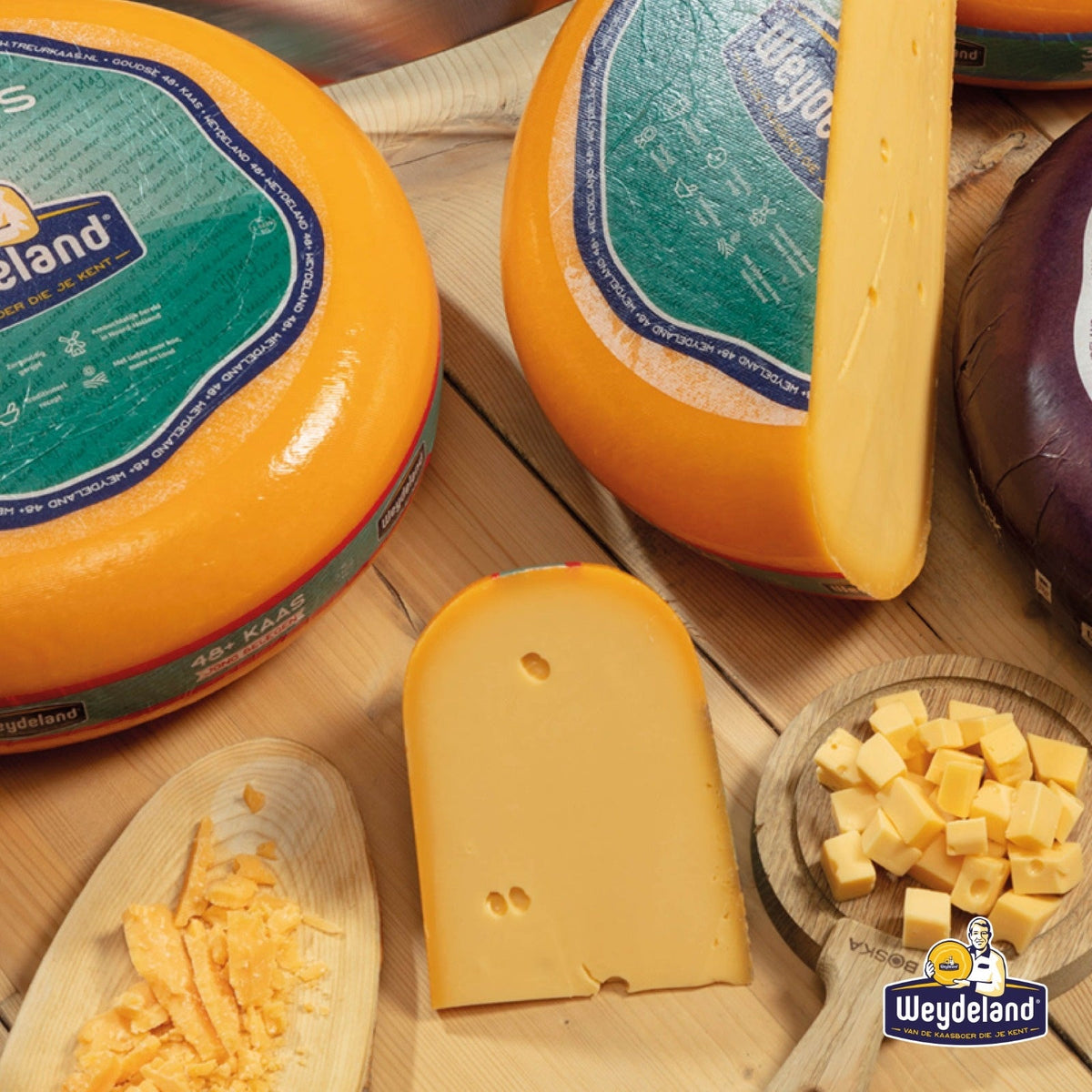
- Cow's milk is the basis of classic Dutch cheese such as Gouda. Cows store beta-carotene from grass in their milk, which gives cow's milk cheese its yellow colour.
- Goat's milk contains smaller fat globules and different fatty acids than cow's milk. These fatty acids give goat cheese its fresh, slightly tangy flavour. Goats convert beta-carotene into vitamin A, which makes goat cheese pure white.
- Sheep's milk is the richest of the three. It contains more fat and protein than cow's and goat's milk. This makes sheep cheese extra creamy, with a slightly sweet, nutty flavour. Sheep cheese is also white.
Goat cheese: fresh, creamy and pure white
You can immediately recognise goat cheese by its white colour and fresh flavour. The typical "goat flavour" comes from certain fatty acids in goat's milk. In young goat cheese, this flavour is mild and fresh. The longer goat cheese matures, the fuller, tangier and nuttier it becomes.
Goat cheese comes in many forms:
- Soft, spreadable goat cheese: creamy and mild, delicious on toast or a cracker
- Young and aged goat cheese: creamy and smooth, a Dutch take on Gouda cheese
- Mature goat cheese: strong, tangy and slightly nutty
- Goat cheese with herbs or blue mould: for those who enjoy an extra flavour accent
Not everyone is a fan of a pronounced goat flavour. Not sure? Start with a young, mild goat cheese and gradually work your way up.
Sheep cheese: rich, slightly sweet and nutty
Sheep cheese is less well known than goat cheese, but certainly worth trying. Because sheep's milk is so rich in fat and protein, sheep cheese is extra creamy and full-bodied. The flavour is slightly sweet and nutty, and much milder than many people expect. Sheep cheese is also white.
Sheep cheese comes in two flavour styles:
- Young, mild sheep cheese: soft, creamy and slightly fresh, an accessible introduction
- Hard, long-matured sheep cheese: strong, savoury and crumbly, ideal for grating
In Southern Europe, sheep cheese is very common. Think of Italian pecorino, where "pecora" means sheep. But delicious sheep cheeses are also made in the Netherlands.
Cow, goat and sheep compared
| Cow's milk cheese | Goat cheese | Sheep cheese | |
|---|---|---|---|
| Colour | Yellow | Pure white | White to ivory white |
| Young flavour | Mild and creamy | Fresh and slightly tangy | Mild, slightly sweet and creamy |
| Mature flavour | Tangy and savoury | Strong and nutty | Savoury, strong and crumbly |
| Texture | Smooth to crumbly | Smooth and creamy | Extra creamy, hard when mature |
| Known for | Gouda cheese | Chevretta | Pecorino |
Digestibility, lactose and cow's milk allergy
There are a few persistent ideas about goat cheese and sheep cheese. Here is the truth:
- Digestibility. Some people find goat cheese lighter and easier to digest than cow's milk cheese. This is often attributed to the smaller fat globules in goat's milk. Whether you notice this yourself varies from person to person.
- Lactose. Goat's and sheep's milk also contain lactose. Just like cow's milk cheese, the longer the cheese matures, the less lactose it contains. Fresh and soft goat cheese contains more lactose than aged or mature goat cheese. You can read more about this in our blog on lactose-free cheese.
- Cow's milk allergy. Goat and sheep cheeses are usually not a good alternative for those with a cow's milk allergy. The proteins in goat's and sheep's milk are very similar to those in cow's milk, so your body often reacts to them as well. If you have a cow's milk allergy, consult your GP or dietitian.
Goat cheese and sheep cheese at Kaas & Borrelz
Goat cheese
- Chevre Doux goat spreadable cheese – velvety soft, mild and slightly sweet, an accessible introduction to goat cheese
- Chevretta 50+ Young Aged goat cheese – matured for around 8 weeks, mild and creamy with a slightly tangy undertone
- Chevretta 50+ Aged goat cheese – matured for around 4 months, full-bodied and slightly tangy
- Chevretta 50+ Mature goat cheese – matured for around 1 year, strong with a slightly nutty flavour
- Chevretta 50+ Fenugreek goat cheese – creamy goat cheese with spicy, nutty fenugreek seeds
- Chevretta Blue blue mould cheese – goat cheese with blue mould, creamy and slightly piquant
Sheep cheese
- Twisca sheep cheese – a mild, creamy North Holland sheep cheese matured for around 8 weeks, slightly fresh and sweet
- Pecorino Romano – a hard Italian sheep cheese, strong, savoury and slightly salty, delicious grated over pasta
This range lets you explore everything from mild to strong.
How to serve goat and sheep cheese
- Pair with something sweet. The fresh flavour of goat cheese pairs wonderfully with a sweet dip such as Cranberry Sauce or Pineapple Ginger Sauce. Honey and figs also work well.
- Spread it on a cracker. Chevre Doux is at its best on a crispy cracker such as the Rosemary Crackers.
- Grate it over pasta. Pecorino Romano instantly gives a pasta dish a savoury, Italian flavour.
- Create a snack platter with cow, goat and sheep cheese. Arrange a Weydeland 48+ Aged, a Chevretta 50+ Aged and a Twisca sheep cheese side by side. This lets your guests immediately taste the difference between the three types of milk.
- Add nuts. Roasted and salted almonds pair well with the nutty flavour of mature goat and sheep cheeses.
Frequently asked questions about goat cheese and sheep cheese
Why is goat cheese white?
Goats convert the yellow pigment beta-carotene from grass into vitamin A. As a result, goat's milk contains no yellow pigment and goat cheese is pure white.
Why does goat cheese taste different from cow's milk cheese?
Goat's milk contains different fatty acids than cow's milk. These give goat cheese its distinctive fresh, slightly tangy flavour.
Is feta goat cheese or sheep cheese?
Feta is primarily sheep cheese. It is made from sheep's milk, sometimes supplemented with goat's milk, and is a specific fresh cheese from Greece. Sheep cheese is a collective term for all cheese made from sheep's milk, such as Pecorino and Dutch sheep cheese.
Does goat cheese contain lactose?
Yes. Goat cheese also contains lactose, although the amount decreases as the cheese matures. If you are looking for cheese that is definitely lactose-free, choose from the Weydeland range.
Can you eat goat cheese if you are pregnant?
Hard and aged goat cheese made from pasteurised milk is safe. Be careful with fresh, soft goat cheese made from raw milk. Read more in our blog on cheese during pregnancy.
Conclusion: three types of milk, three worlds of flavour
The difference between cow's milk cheese, goat cheese and sheep cheese lies in the milk. Cow's milk cheese is yellow and familiar, goat cheese is pure white, fresh and slightly tangy, and sheep cheese is extra creamy with a sweet, nutty flavour. Each type of milk has its own character, from mild to strong. Discover them for yourself with the Chevretta goat cheeses, the mild Twisca sheep cheese and the strong Pecorino Romano at Kaas & Borrelz.