
What cheese can you eat when you are pregnant?
Pregnant and craving a delicious piece of cheese? Good news: you can continue to eat most cheeses. Cheese is also a valuable source of calcium, which is important for your baby's bone development. However, there are a few cheeses you should be more careful with during pregnancy. In this blog, you'll find out which cheeses you can eat when you're pregnant, which ones you're better off avoiding, and how to identify them on the label.

Why should you be careful with cheese when you're pregnant?
The reason is listeria. This is a bacterium that can occur in raw milk and products made from it. For most people, a listeria infection is harmless, but during pregnancy, the bacterium can reach your baby through the placenta. This can lead to miscarriage, premature birth, or an infection in your baby. The risk is small, but the consequences can be serious. That's why it's wise to avoid high-risk cheeses.
Pasteurised, thermised or raw milk: that's what matters
Whether a cheese is safe during pregnancy depends mainly on two things: the milk it's made from and how hard the cheese is. Cheese is made from three types of milk:
- Pasteurised milk is briefly heated to at least 72°C. This kills harmful bacteria such as listeria. Cheese made from pasteurised milk is therefore safe, even if it's a soft cheese.
- Thermised milk is heated less intensely, to around 57 to 68°C. A large proportion of the bacteria is eliminated, while the milk retains more of its natural flavour. That's why many artisan farmhouse cheesemakers use thermised milk. However, thermisation is milder than pasteurisation.
- Raw milk is not heated at all. In soft and young cheese made from raw milk, listeria can survive and multiply.
The hardness of the cheese also matters. According to the Netherlands Nutrition Centre, listeria cannot multiply to high levels in hard cheese, even if it's made from raw milk. Hard, long-matured cheese is therefore safe, regardless of the milk.
You can find out which milk was used on the label or in the product description in our webshop.
Which cheeses can you eat when you're pregnant?
You can eat these cheeses from our range with peace of mind during pregnancy:
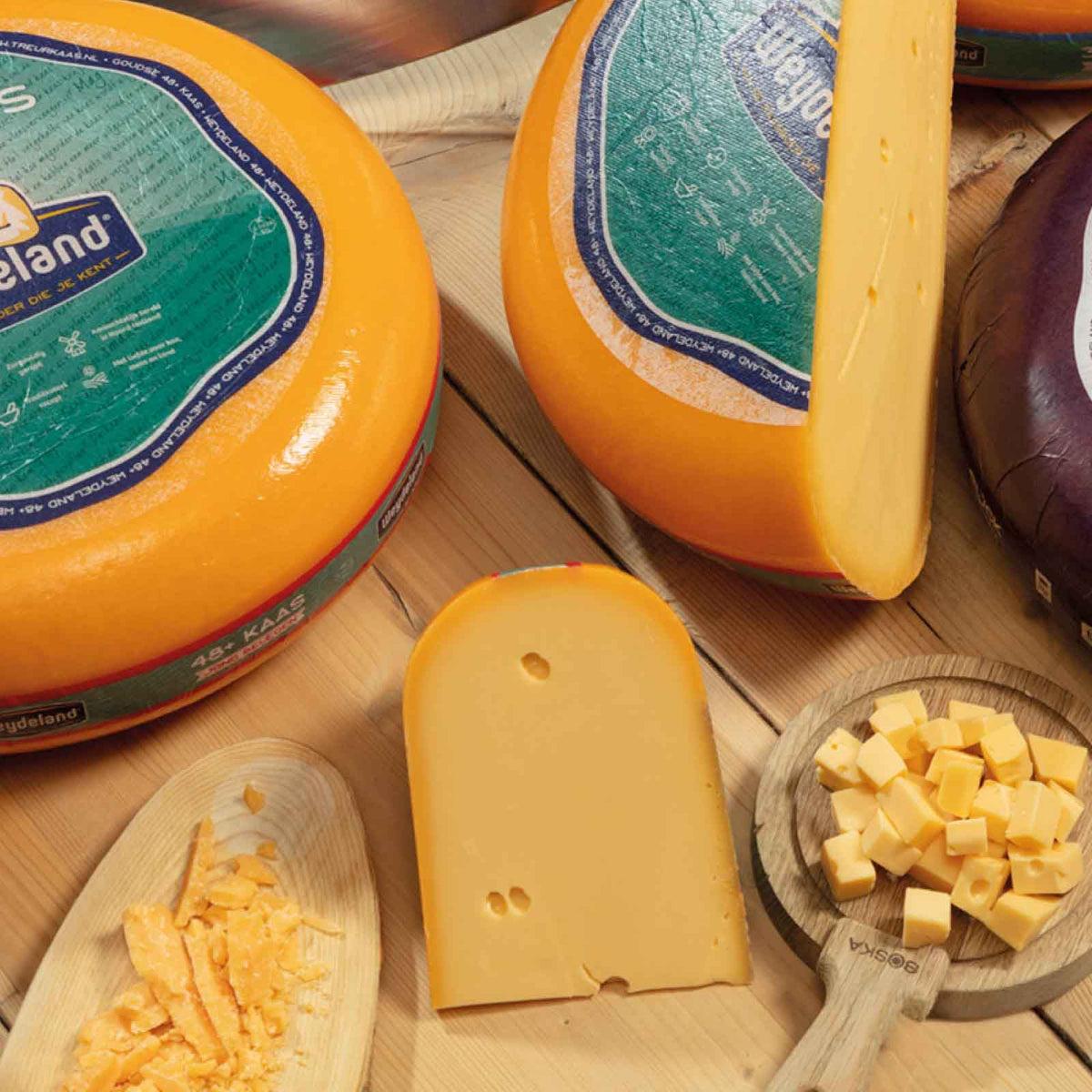
- The complete Weydeland range. All Weydeland cheeses are made from pasteurised milk. From Weydeland 48+ Jong and Weydeland 48+ Jong Belegen to Weydeland 48+ Oud Overjarig, Weydeland Rijck brokkelkaas, Weydeland 48+ Graskaas and Weydeland Komijnekaas 35+ Mild.
- Hard, long-matured cheese, also made from raw or thermised milk. Think of Parmigiano Reggiano 30 months, Comté Gruyère mountain cheese and Pecorino Romano, or the thermised Oude Mei Kaas and Erfgoed Stelling 705 Extra Belegen farmhouse cheese.
- Soft cheese made from pasteurised milk, such as the French red-flora cheese Petit Tourtain.
Good to know: Weydeland cheese is also lactose-free. Read more about this in our blog about lactose-free cheese.
Which cheeses should you avoid when you're pregnant?
It's best to avoid these cheeses during pregnancy:
- Young and soft cheese made from raw milk. For example, young raw milk farmhouse cheese such as the Erfgoed Stelling 502 young raw milk farmhouse cheese.
- Soft cheeses made from raw milk, such as brie, camembert or fresh goat cheese with 'au lait cru' on the label.
Still craving it? Soft cheese made from raw milk becomes safe if you heat it thoroughly, for example in a casserole or as hot cheese from the oven, until it is piping hot all the way through.
When in doubt: here's the deal
Thermised cheese during pregnancy
Our Villa herb cheeses and Bon Repas are made from thermised milk and range from young to matured. The Netherlands Nutrition Centre does not give separate advice for thermised cheese. If you want to be on the safe side, choose cheese made from pasteurised milk, such as Weydeland, or consult your midwife. When heated thoroughly, for example melted in a casserole, these cheeses are also safe.
Soft cheese such as brie and camembert
Soft cheese is safe if it's made from pasteurised milk. It's not about how soft the cheese is, but about the milk. Does it say 'au lait cru' or 'raw milk'? Then it's best to avoid it, or eat it thoroughly heated.
Blue cheese and blue mould cheese
The same applies to blue cheese: made from pasteurised milk? Then you can eat it. The blue mould itself is not a problem.
Goat cheese and sheep cheese
Hard and matured goat and sheep cheese made from pasteurised milk is safe. Be extra alert with fresh, soft goat cheese, as it's more often made from raw milk.
The rind
You can eat the white mould rind of brie and camembert, as long as the cheese is made from pasteurised milk. The plastic rind (cheese coating) around Gouda cheese is not intended to be eaten. Always cut it off.
Tips: how to choose safe cheese
- Read the label. If it says 'raw milk', 'raw milk cheese' or 'au lait cru', the cheese is made from raw milk. If it says 'thermised milk', the milk has been lightly heated. If it only says 'milk' or 'pasteurised milk', you're good to go.
- When in doubt, choose hard cheese. The harder and older the cheese, the lower the risk.
- Ask us. We'll be happy to tell you what milk cheese from our webshop is made from.
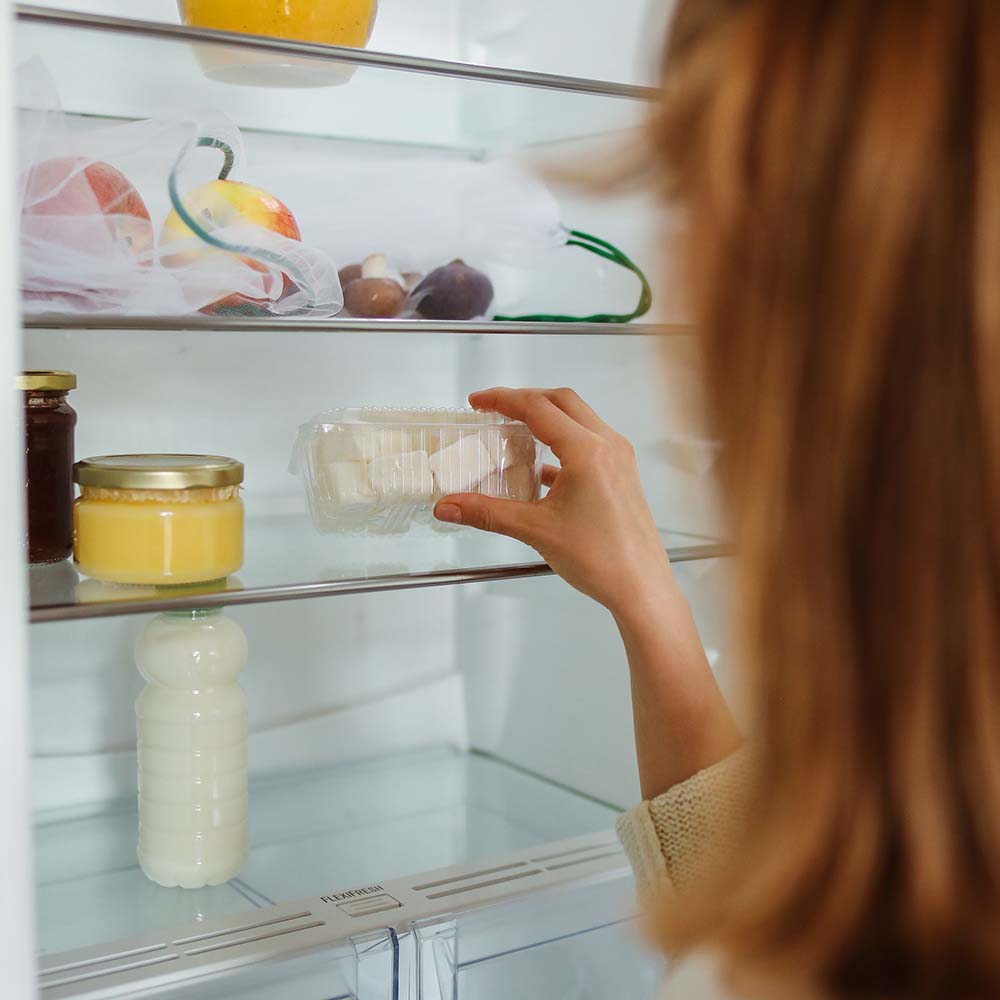
- Store cheese properly. Store cheese in the refrigerator and eat pre-packaged, opened cheese within a few days.
Frequently asked questions about cheese and pregnancy
Can you eat Gouda cheese when you're pregnant?
Yes. Gouda cheese made from pasteurised milk is safe, from young to extra-matured. All Weydeland cheeses are made from pasteurised milk.
Can you eat Parmesan cheese when you're pregnant?
Yes. Parmesan cheese is a hard cheese. According to the Netherlands Nutrition Centre, listeria cannot multiply in it, even if the cheese is made from raw milk.
Can you eat farmhouse cheese when you're pregnant?
That depends on its age. Farmhouse cheese is always made from raw milk. That's why it's best to avoid young farmhouse cheese. Hard, long-matured farmhouse cheese is safe. Read more in our blog about farmhouse cheese, farmhouse cheese and factory-made cheese.
Can you eat brie when you're pregnant?
Yes, if the brie is made from pasteurised milk. It's best to only eat raw milk brie ('au lait cru') thoroughly heated.
Can you eat cheese in a toasted sandwich or casserole?
Yes. By heating cheese thoroughly until it is piping hot all the way through, any bacteria are killed.
Can you eat goat cheese when you're pregnant?
You can eat hard and matured goat cheese made from pasteurised milk. Be careful with fresh, soft goat cheese made from raw milk, or eat it thoroughly heated. Check the label to see which milk was used. Read more in our blog about goat cheese and sheep cheese.
Can you eat feta when you're pregnant?
You can eat feta made from pasteurised milk. If the label says raw milk or 'au lait cru', it's best to avoid it or eat it thoroughly heated.
Conclusion: enjoy cheese during your pregnancy
You don't have to go without cheese during pregnancy. Cheese made from pasteurised milk and hard, long-matured cheese is safe. Be careful with young and soft cheese made from raw milk, and check the label when in doubt. With the complete Weydeland range, you're always good to go: from young and creamy to extra-matured and full of cheese crystals.
This blog is intended as general information and does not replace medical advice. Do you have questions about nutrition during pregnancy? Contact your midwife or visit the website of the Netherlands Nutrition Centre.