
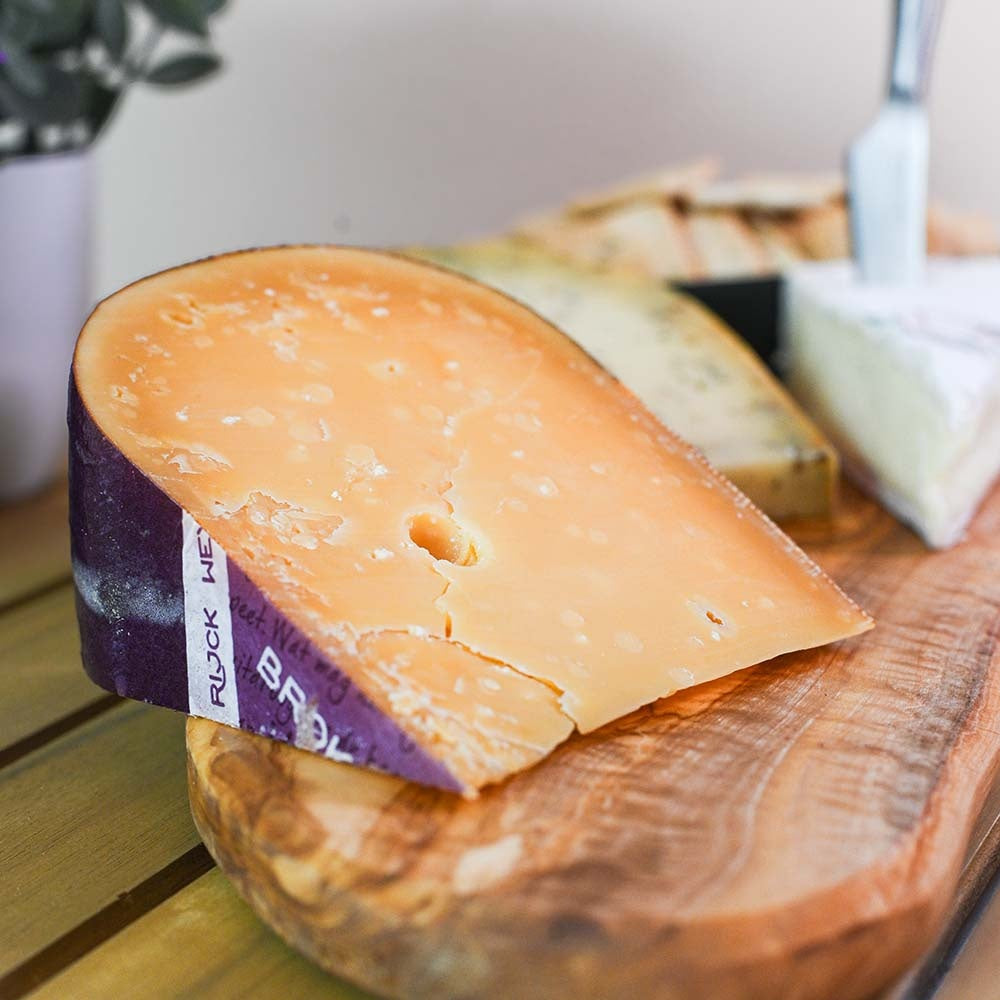
White crystals in aged cheese: what are they?
You cut a piece of aged cheese and see small white dots. When you bite into them, they crunch between your teeth. Salt? Sugar? Or is something wrong with the cheese? Don't worry: those white crystals in aged cheese are actually a sign of quality. In this blog, you'll learn what cheese crystals are, how they form, how to distinguish them from mold, and which cheeses contain them.

What are cheese crystals?
Cheese crystals are small white granules that form during the aging process. They are not salt or sugar, nor are they a sign that the cheese has spoiled. The crystals consist of substances that occur naturally in cheese and clump together into crunchy bits during long aging.
Cheese lovers adore them. The crystals provide a delicious crunch and are found mainly in long-aged cheeses, such as aged and extra-aged cheese.
Salt crystals in cheese? A persistent misconception
Many people call the white dots in aged cheese salt crystals. It makes sense, as they look like salt grains and aged cheese often tastes a bit saltier. However, this is not true. The salt in cheese comes from the brine bath and dissolves completely in the moisture of the cheese. It does not form crystals. The crunchy bits you taste are protein crystals that form during aging. Salt crystals in cheese therefore do not really exist: they are cheese crystals.
Two types of cheese crystals
There are two types of crystals you may find in cheese. They look similar, but form in different ways.
Tyrosine crystals: the crunchy bits inside
The best-known cheese crystals are scattered throughout the cheese. They consist mainly of tyrosine, an amino acid. Tyrosine is a building block of proteins and is released when the milk protein in the cheese breaks down during aging. Because tyrosine dissolves poorly, it clumps together over time into hard white granules. These are the crystals that crunch when you bite into them.
Calcium lactate crystals: the white layer on the outside
Sometimes you may see a white, powdery layer or white specks on the cut surface or outside of the cheese. This is usually calcium lactate. It forms when lactic acid in the cheese binds with calcium. These crystals are softer and feel slightly grainy. They are more common when a piece of cheese has been cut and left in the refrigerator for a while.
Both types of crystals are completely harmless and can be eaten.
How do cheese crystals form?
Cheese crystals mainly need time. During aging, enzymes and bacteria slowly break down the proteins in the cheese into smaller pieces: first peptides, then free amino acids such as tyrosine. At the same time, the cheese loses moisture. The longer the cheese ages, the more tyrosine is released and the drier the cheese becomes. At some point, the moisture can no longer keep the tyrosine dissolved, and the crystals form.
This is why you rarely see cheese crystals in young cheese. They usually only appear after about seven months of aging or longer. In extra-aged cheese, you may sometimes see a single crystal, while in aged and extra-aged cheese, they are often abundant.
The same protein breakdown also creates the full, savory, and piquant flavor of aged cheese. Crystals and flavor therefore go hand in hand. Read more about aging in our blog about the difference between young, aged, and extra-aged cheese.
Cheese crystals or mold? How to tell the difference
The white layer of calcium lactate is sometimes mistaken for mold. These characteristics will help you quickly identify what it is:
| Cheese crystals | Mold | |
|---|---|---|
| Color | White to translucent | White, green, blue, or gray |
| Texture | Hard, grainy, or crystalline | Soft, fluffy, or hairy |
| Feel | Crunches or feels like sand grains | Wipes off, feels moist or powdery |
| Location | Throughout the cheese or on the cut surface | Usually on the surface, grows outward |
Not sure? Rub it with your finger. Crystals feel grainy and remain hard, while mold is soft and wipes off. If you do see mold on hard cheese, cut it away generously. Read how to handle this in our blog about storing cheese.
Which cheeses contain cheese crystals?
You will find cheese crystals in long-aged cheeses. In our range, you can taste them in, among others:
- Weydeland 48+ Aged Extra-Aged – a full-flavored, powerful cheese full of flavor crystals
- Weydeland Rijck crumbly cheese – extra-aged, crumbly, and rich in crystals
- Weydeland 48+ Extra-Aged – the first crystals appear here
- Erfgoed Stelling 705 Extra-Aged Farmhouse Cheese – aged for about nine months, with characteristic aging crystals
- Aged Mei Cheese – a grass-fed cheese about one year old
- 48+ Aged Comté Cheese – piquant, spicy, and with a delicious crunch
- 30-Month Parmigiano Reggiano – aged for thirty months and known for its crunchy crystals
- Comté Gruyère Mountain Cheese – a hard French mountain cheese with a nutty flavor
How to best enjoy cheese with crystals
- Break it instead of cutting it. Aged cheese with crystals crumbles easily. Break it into rough pieces with a cheese knife so the crystals remain intact.
- Serve at room temperature. Take the cheese out of the refrigerator half an hour to an hour before serving. This allows the full flavor and crunchy crystals to shine.
- Pair it with something sweet. Aged cheese with crystals pairs wonderfully with a sweet dip such as Cranberry Sauce or Balsamic Cinnamon Sauce, or a handful of roasted and salted almonds.
- Make it part of a snack platter. Place an aged cheese with crystals next to a creamy young aged cheese so your guests can taste the difference.
Frequently asked questions about cheese crystals
Are cheese crystals salt crystals?
No. Many people call them salt crystals, but this is a misconception. The salt in cheese dissolves in the moisture of the cheese. The white dots in aged cheese are crystals of tyrosine, an amino acid released during aging.
Can you eat cheese crystals?
Yes. Cheese crystals are completely harmless and are actually a sign of well-aged cheese.
Why doesn't young cheese have crystals?
Young cheese has not been aged long enough. Not enough protein has broken down yet, and the cheese still contains too much moisture for crystals to form.
Is a white layer on my cheese mold?
Usually not. A white, grainy layer on the cut surface is often calcium lactate. If it feels soft and fluffy, it is mold.
Does cheese with crystals contain less lactose?
Yes. Cheese with crystals has been aged for a long time, and the longer cheese ages, the less lactose it contains. Read more in our blog about lactose-free cheese.
Conclusion: crystals are a sign of quality
The white crystals in aged cheese are not salt crystals or mold, but tyrosine or calcium lactate crystals that form during long aging. They are harmless, provide a delicious crunch, and are a sign of well-aged cheese. Want to taste them for yourself? Discover the Weydeland 48+ Aged Extra-Aged, the Weydeland Rijck Crumbly Cheese, or the 30-Month Parmigiano Reggiano at Kaas & Borrelz.