What is grass-fed cheese? Everything about the first cheese of the season
Every year, cheese lovers look forward to it: the first grass-fed cheese of the season. Extra creamy, soft, slightly sweet, and with a sunny golden-yellow color. But what exactly is grass-fed cheese, why does it taste so different from regular young cheese, and when can you buy it? In this blog, you'll learn everything about grass-fed cheese and May cheese, from the whey to your sandwich.

What is grass-fed cheese?
Grass-fed cheese is cheese made from the first milk of cows that go out to pasture again after winter. In winter, cows are kept in the barn and mainly eat silage and hay. In spring, they go outside and eat fresh, tender spring grass. You can taste this change in diet in the milk, and therefore also in the cheese.
So grass-fed cheese is not a separate type of cheese, but a seasonal cheese. It is usually a young Gouda cheese that is aged briefly and sold shortly after production. This allows you to best enjoy the fresh, creamy taste of spring milk.
Why does grass-fed cheese taste different?
The secret lies in the fresh grass. It has three effects on the milk and the cheese:
- Extra creamy and soft. Due to the young spring grass, the milk contains softer fats. This makes grass-fed cheese creamier and creamier than regular young cheese.
- A golden-yellow color. Fresh grass is full of beta-carotene, a natural yellow dye. This ends up in the milk and gives grass-fed cheese its sunny color.
- A fresh, slightly sweet taste. Grass-fed cheese is mild and fresh, with a slightly sweet, grassy note.
In short: grass-fed cheese is spring in cheese form.
When is grass-fed cheese available?
Grass-fed cheese is a true seasonal product. Cows go out to pasture in spring, and a few weeks later, the first grass-fed cheese is ready. Young grass-fed cheese is therefore usually only available in May and June, and only while supplies last.
Miss the grass-fed cheese season? Then you don't have to wait a whole year. Longer-aged grass-fed cheese remains available for much longer. Read more about that below.
Grass-fed cheese and May cheese: young and old
Most people know grass-fed cheese as a young, creamy cheese. But grass-fed cheese can also be aged for a long time. Cheese made from spring milk in May is also called May cheese.
- Young grass-fed cheese is aged briefly and is extra soft, creamy, and mild. You eat it in spring and early summer.
- Old May cheese is made from the same spring milk, but is aged much longer, sometimes for up to a year. This gives it a full, pronounced flavor, while it remains surprisingly creamy thanks to the creamy spring milk.
This way, you can enjoy the taste of spring all year round. Read more about what aging does to cheese in our blog about the difference between young, matured, and old cheese.
Grass-fed cheese at Kaas & Borrelz
In our webshop you will find two grass-fed cheeses, each with its own character:
Weydeland 48+ Grass-fed Cheese
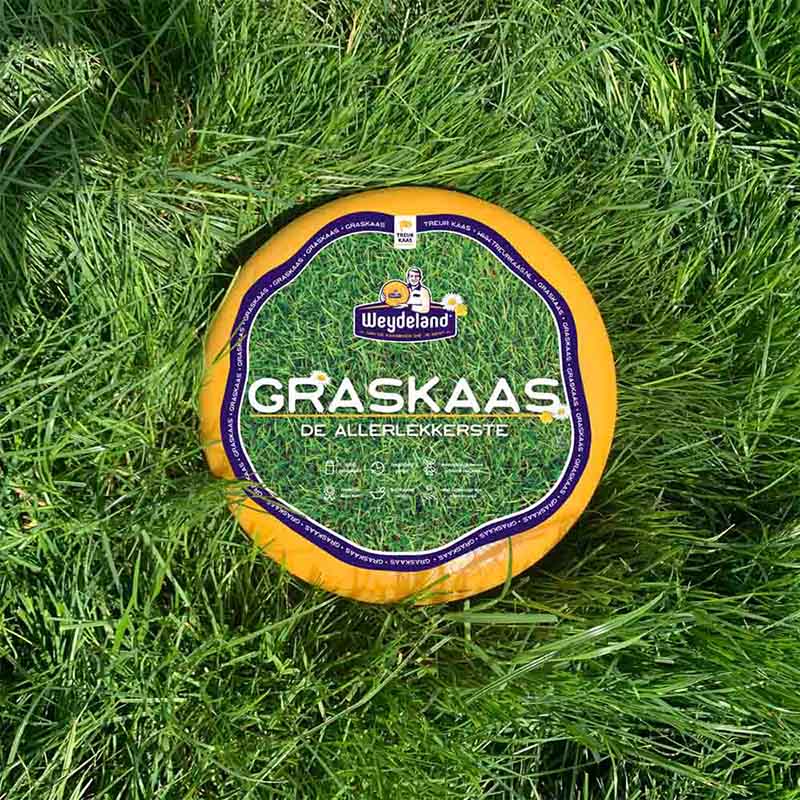
The Weydeland 48+ Grass-fed Cheese is made from the first milk of cows that eat fresh spring grass again after winter. It is extra creamy and soft, fresh and mild in taste, slightly sweet, and has a beautiful golden-yellow color. This young grass-fed cheese is a seasonal product and is only available in May and June. Like the rest of the Weydeland range, it is made from pasteurized milk and is lactose-free.
Old May Cheese
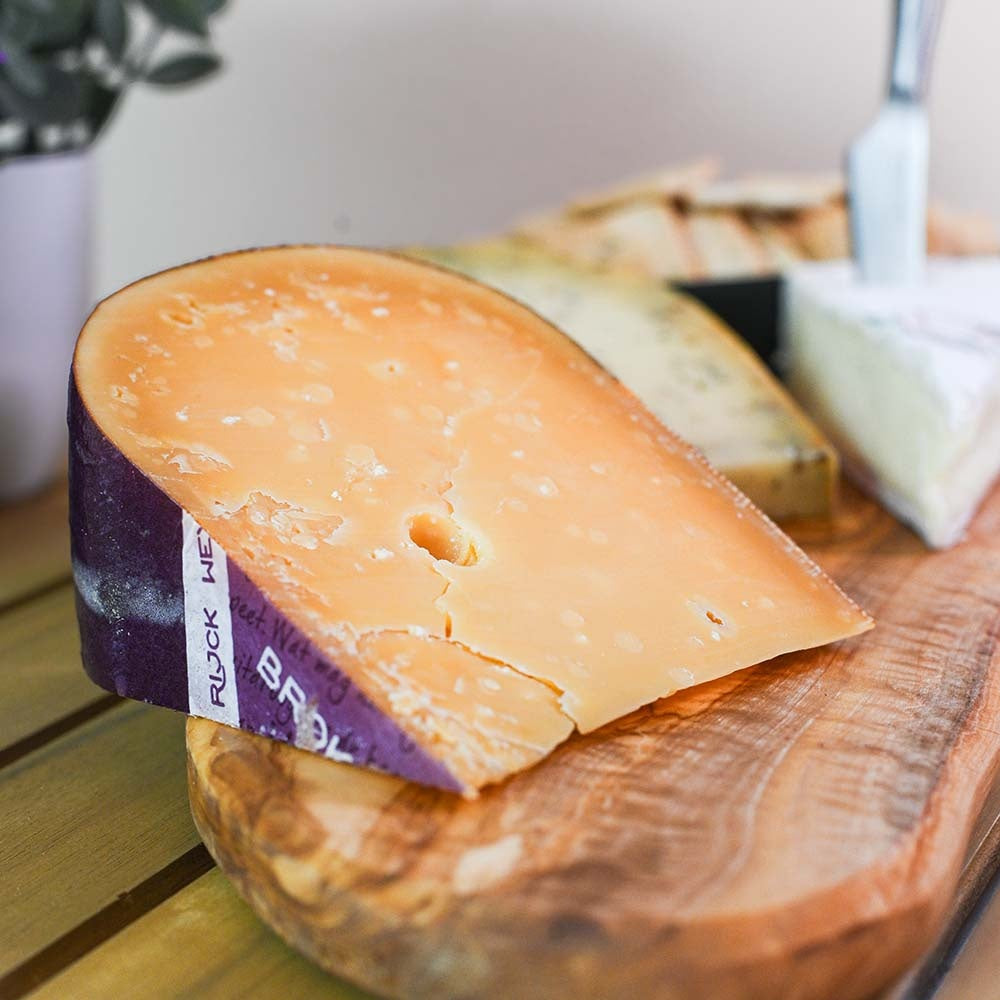
The Old May Cheese is a seasonal grass-fed cheese that has aged for approximately one year. It is made from thermized milk in an extra-large 30-kilogram format, allowing it to age slowly and evenly. The result is a very creamy cheese with a full, pronounced flavor and a slightly nutty undertone. Because it has aged for so long, you can also taste it outside the grass-fed cheese season.
How to enjoy grass-fed cheese
- Pure on bread. Young grass-fed cheese is best enjoyed in thick slices on fresh bread or a crispy cracker, such as the Rosemary Crackers.
- From the fist. Cut grass-fed cheese into cubes and enjoy it with drinks, optionally with a fresh juice such as the Apple-Strawberry Juice.
- In a fresh salad. Cubes of grass-fed cheese fit beautifully in a spring salad.
- On the snack board. Place a young Weydeland Grass-fed Cheese next to the full-flavored Old May Cheese. This way, you can taste how the same spring milk tastes after a few weeks and after a year of aging.
Store grass-fed cheese well-wrapped in the refrigerator. Because young grass-fed cheese is soft and creamy, it tastes best within a few weeks after cutting. Read more tips in our blog about storing cheese.
Frequently asked questions about grass-fed cheese
What is the difference between grass-fed cheese and regular young cheese?
Grass-fed cheese is made from the first milk of cows that eat fresh grass again after winter. This makes it creamier, softer, and yellower than regular young cheese.
Why is grass-fed cheese so yellow?
Fresh spring grass contains a lot of beta-carotene. This natural yellow dye ends up in the cheese via the milk.
When is grass-fed cheese for sale?
Young grass-fed cheese is usually only available in May and June, while supplies last. Longer-aged grass-fed cheese, such as Old May Cheese, can be tasted all year round.
What is May cheese?
May cheese is cheese made from spring milk in May. Old May cheese has aged for a long time and combines a full flavor with the creaminess of grass-fed cheese.
Is grass-fed cheese lactose-free?
The Weydeland 48+ Grass-fed Cheese is lactose-free, just like the complete Weydeland range. Read more in our blog about lactose-free cheese.
Conclusion: the taste of spring
Grass-fed cheese is the first cheese of the season, made from the milk of cows that eat fresh grass again after winter. This makes it extra creamy, soft, and golden-yellow. Young grass-fed cheese is only available in May and June, but with a long-aged May cheese, you can taste spring milk all year round. Discover the Weydeland 48+ Grass-fed Cheese and the Old May Cheese at Kaas & Borrelz.