
Cutting cheese: how to cut every type of cheese
A beautiful cheese board starts with well-cut cheese. But what is the best way to cut cheese? A young cheese requires different tools than an aged Parmigiano or a creamy brie. In this blog, you will learn which cheese knife or cheese plane to use for each type of cheese, how to cut every shape of cheese, and what the golden rules are.

Why does the right tool matter?
Cheese varies enormously in texture. Young cheese is soft and supple, aged cheese is hard and crumbly, and brie is creamy and sticky. The wrong knife will tear young cheese, crumble aged cheese unnecessarily, or cause brie to stick to the blade. With the right tools, you will get beautiful slices and cubes, and the cheese will taste delicious.
Which tool do you use for each type of cheese?
Young and young-aged cheese
Use a cheese plane for soft cheese, such as the Soft Cheese Plane. The short planing blade with small teeth ensures that the cheese does not tear or stick. This way, you can plane beautiful, thin slices for bread.
Aged and old cheese
For firmer cheese, use the Hard Cheese Plane. Do you want cubes or thick slices? Then grab the Dutch Cheese Knife. With the two handles, you can effortlessly cut through firm cheese.
Parmigiano Reggiano and Pecorino
Grate or break hard Italian cheeses into pieces. Use the Trio Formaggio Cheese Grater or the Boska Hand Grater to grate. For pieces, use the pointed knife from the 4-Piece Cheese Knife Set. Read more in our blog about Parmigiano Reggiano.
Brie and other soft cheese
For soft cheese such as Double Cream Brie, use a cheese knife for soft cheese. Such a knife often has holes in the blade, so the cheese sticks less. You can find it in the 4-Piece Cheese Knife Set.
Cream cheese and spreadable cheese
You do not cut cream cheese and spreadable cheese; you spread them. Use the spreading knife from the cheese knife set for this. Read more in our blog about cream cheese and spreadable cheese.
Tête de Moine
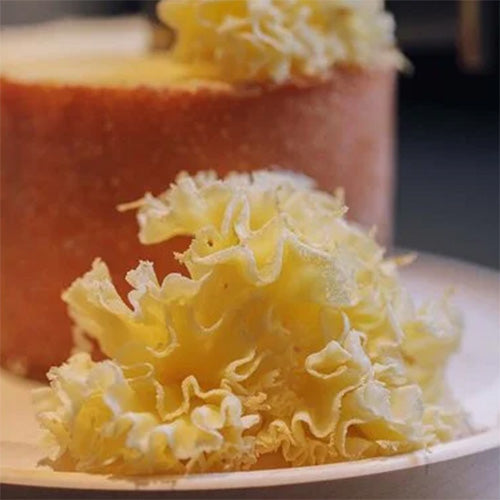
Tête de Moine curled cheese is not cut, but curled with a Cheese Curler. This way, you can make paper-thin rosettes. Read all about it in our blog Tête de Moine: why curl this cheese?
How to cut cheese by shape
- A round cheese, such as brie: cut wedges from the center. This way, everyone gets a piece of the creamy center and the rind.
- A point of a wheel: cut slices across the long side. This way, everyone gets both a piece of the rind and the center.
- A block of cheese: first cut into strips, then into cubes. Handy for the snack board.
The golden rules for cutting cheese
- Cut cold, serve at room temperature: cold cheese is easier to cut. Let it come to temperature afterwards, then you will taste more.
- Everyone gets a piece of rind and a piece of center: the taste varies from the outside to the inside. Read more in our blog about the rind of cheese.
- A separate knife for each cheese: this way you do not mix flavors. This is especially important with blue cheese.
- Only cut just before serving: this way the cheese stays beautiful and moist.
Frequently asked questions about cutting cheese
How do you cut cheese for a cheese board or snack board?
Vary the shapes: cubes of aged cheese, wedges of brie, pieces of old cheese, and rosettes of Tête de Moine. This way, the board looks beautiful and everyone gets to taste everything.
How much cheese do you calculate per person?
As a snack, you calculate approximately 50 to 75 grams of cheese per person. If the cheese is the main course, you calculate about 150 to 200 grams per person.
How do you store cut cheese?
Wrap cut cheese well so that the cut surface does not dry out. Read all the tips in our blog about storing cheese.
How do you cut brie?
Cut a round brie into wedges from the center. From a point of brie, cut narrow slices lengthwise, so that everyone gets a piece of the creamy center and the rind. Use a cheese knife for soft cheese, then the brie will stick less.
Conclusion: the right knife for every cheese
With the right tools, you get the best out of every cheese: a plane for young and aged cheese, a Dutch cheese knife for old cheese, a grater for Parmigiano, and a cheese curler for Tête de Moine. Discover all cheese knives, cheese planes, and graters at Kaas & Borrelz.